

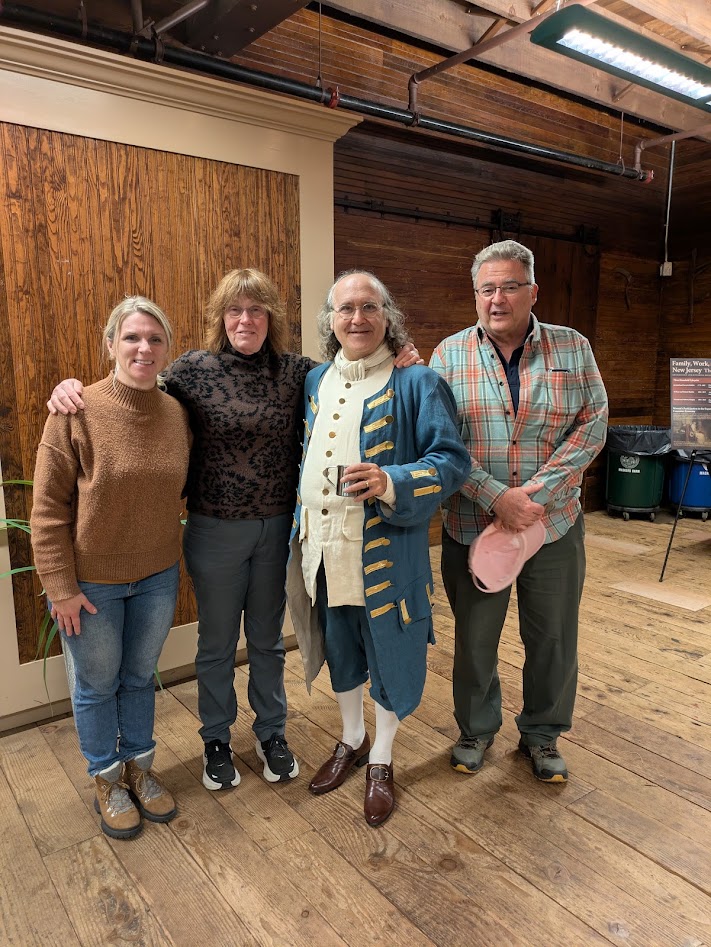
(from left to right) Carissa Scarpa, Priscilla Hayes, Ben Franklin, Matt Tomaso
LIVING HISTORY AT THE DESERTED VILLAGE OF FELTVILLE
FOUR CENTURIES IN A WEEKEND 2026
Our annual celebration of Four Centuries in a Weekend at the Deserted Village of Feltville gave us more and more living history! There were more characters on hand, mostly from the colonial and revolutionary era (for America’s 250th Anniversary). We had more of our wonderful research team on hand—archaeologists, historians, reenactors, or some combination of the above.
And lots of show and tell! The archaeological artifacts from years of the Feltville Archaeology Project have come home, and our fabulous archaeologists, Matt Tomaso and Carissa Scarpa were on hand to introduce visitors to several table of artifacts and explained what they showed.
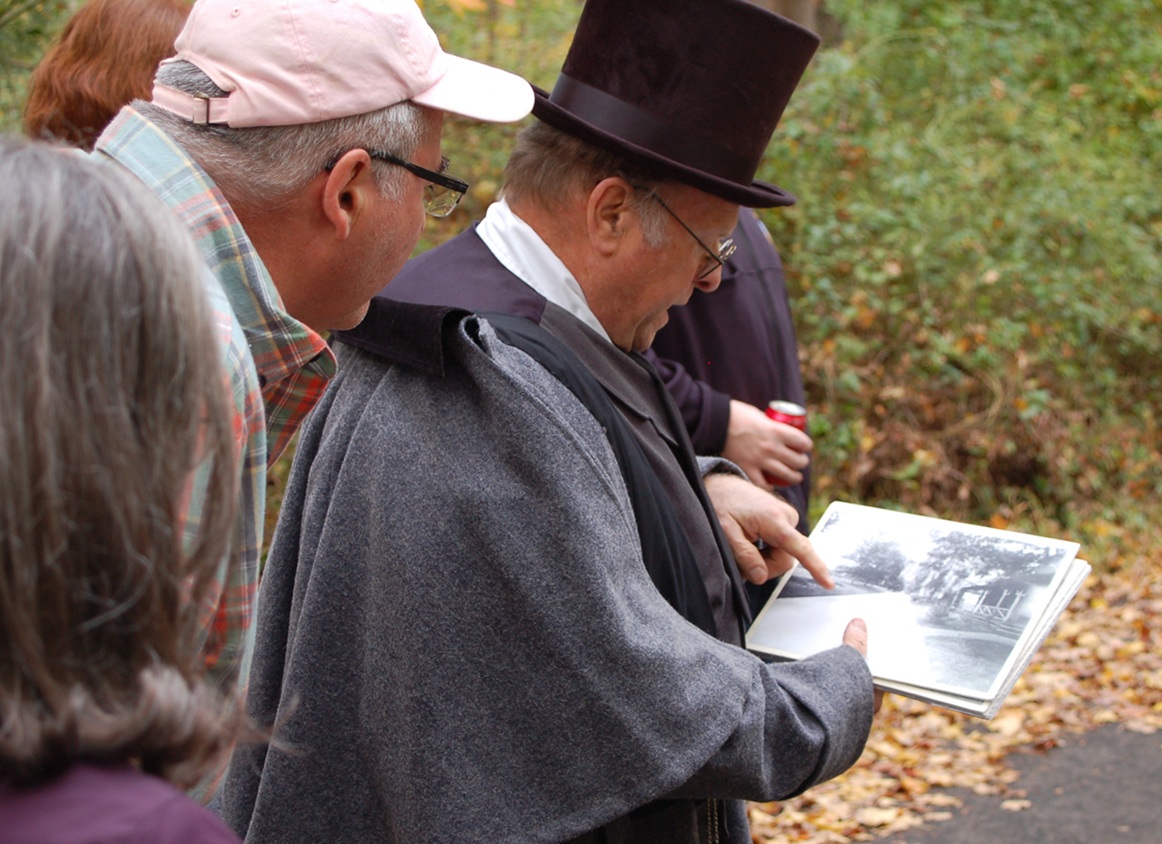 Matt Tomaso looks over David Felt’s shoulder at newly discovered photographs |
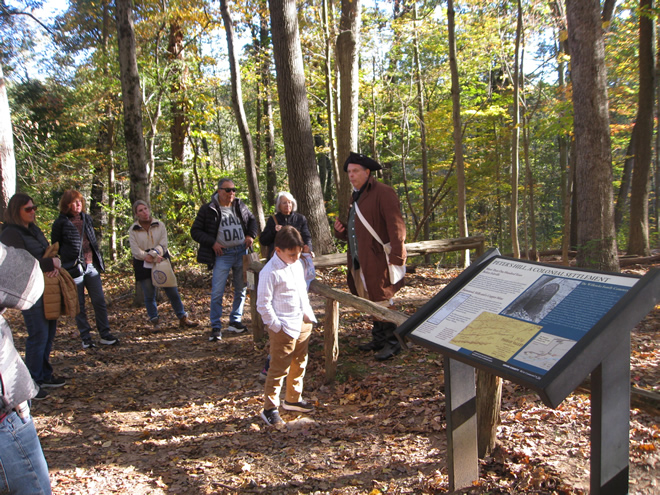 John Willcocks (Tim Bernier) talks to visitors in the cemetary |
I had several tables of show and tell myself. Reenactor Tim Bernier provided a full set of the historically accurate clothing of an eighteenth century man—don’t worry, he was wearing another full set as he greeted visitors as John Willcocks, as a Revoluntionary War soldier, in his customary spot in the cemetery. At the tables with John’s extra clothes, I was likely entirely too gleeful as I explained the fact that no one was wearing underwear at the time.
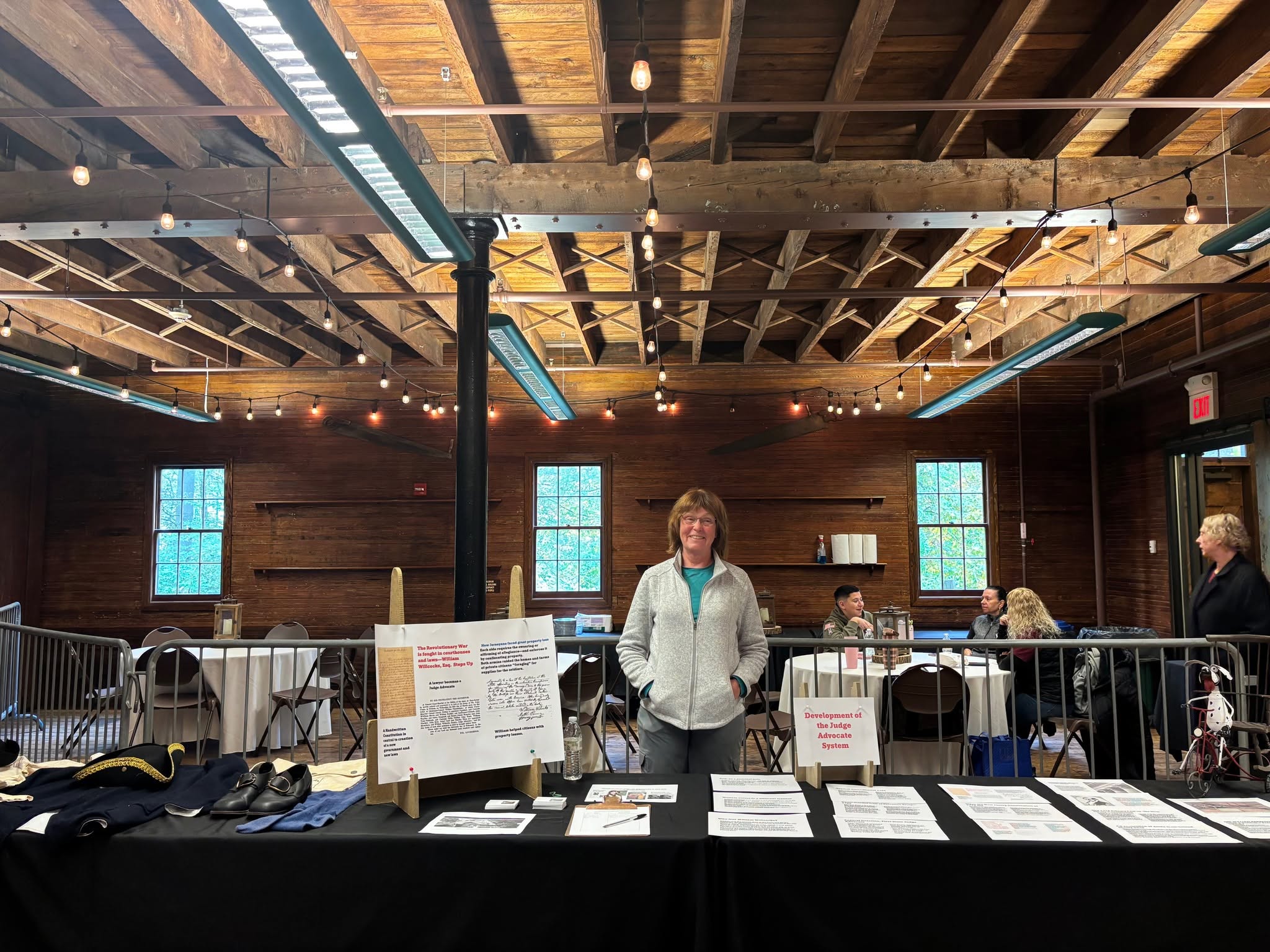 Priscilla Hayes with her display on the life of William Willcocks |
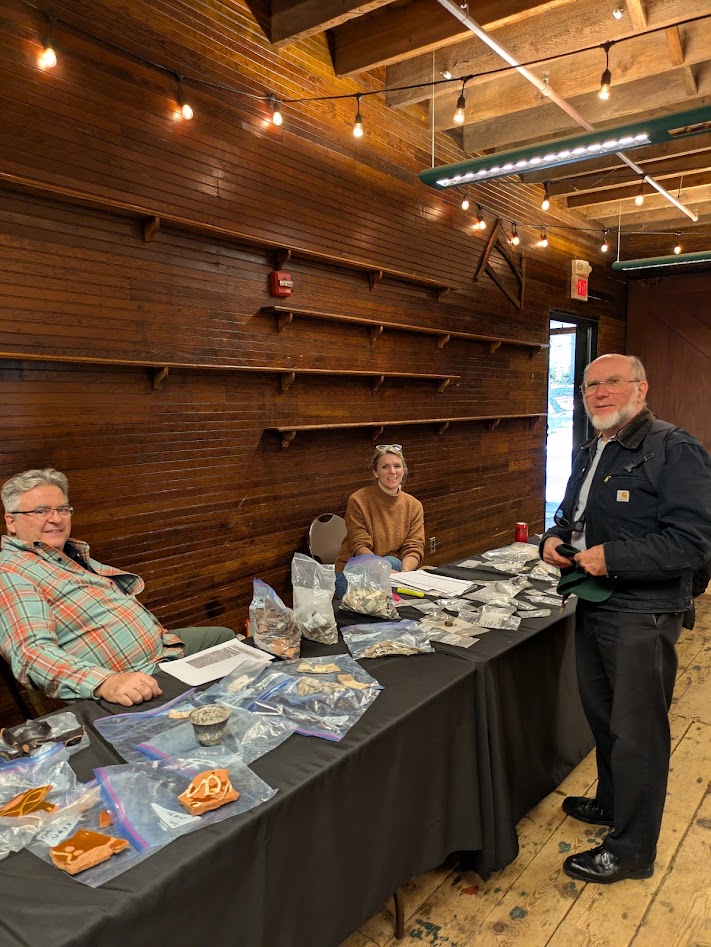 Matt Tomaso and Carissa Scarpa show off the archaeological artifacts to visitor Bill Schryba |
I also had a table display regarding one of the village’s three known Revolutionary War soldiers—William Willcocks. Unlike his brother John Willcocks, who was a soldier and who died as a result of his service in 1776, William served the patriot cause as a lawyer—one of a new institution created by George Washington called Judge Advocates, who prosecuted court martials and provided other military justice. I have only scratched the surface of his amazing life, but I have included my initial findings as one of the slide shows here. My special thanks go out for research help from Tim Bernier and one of William’s descendants, Kathy Zinskie.
This post tries to give you a small part of the fun we had all working together this year. Click on the links below to view pictures and information that I hope will knock your knickers off.
- William Willcocks—a military and civil lawyer in the Revolution’s most dangerous state.
- John Willcocks—in the flesh in the cemetery and represented in the clothing of an eighteenth-century colonial.
- The archaeological record—literally ground truthing the history of the village, brought to life through the work of Matt Tomaso and Carissa Scarpa.
- Our biggest cast of characters ever, mostly colonial, but how could we leave out our later artist, Roberto de la Selva?
- Touring and enjoying the village!